Austin hail map
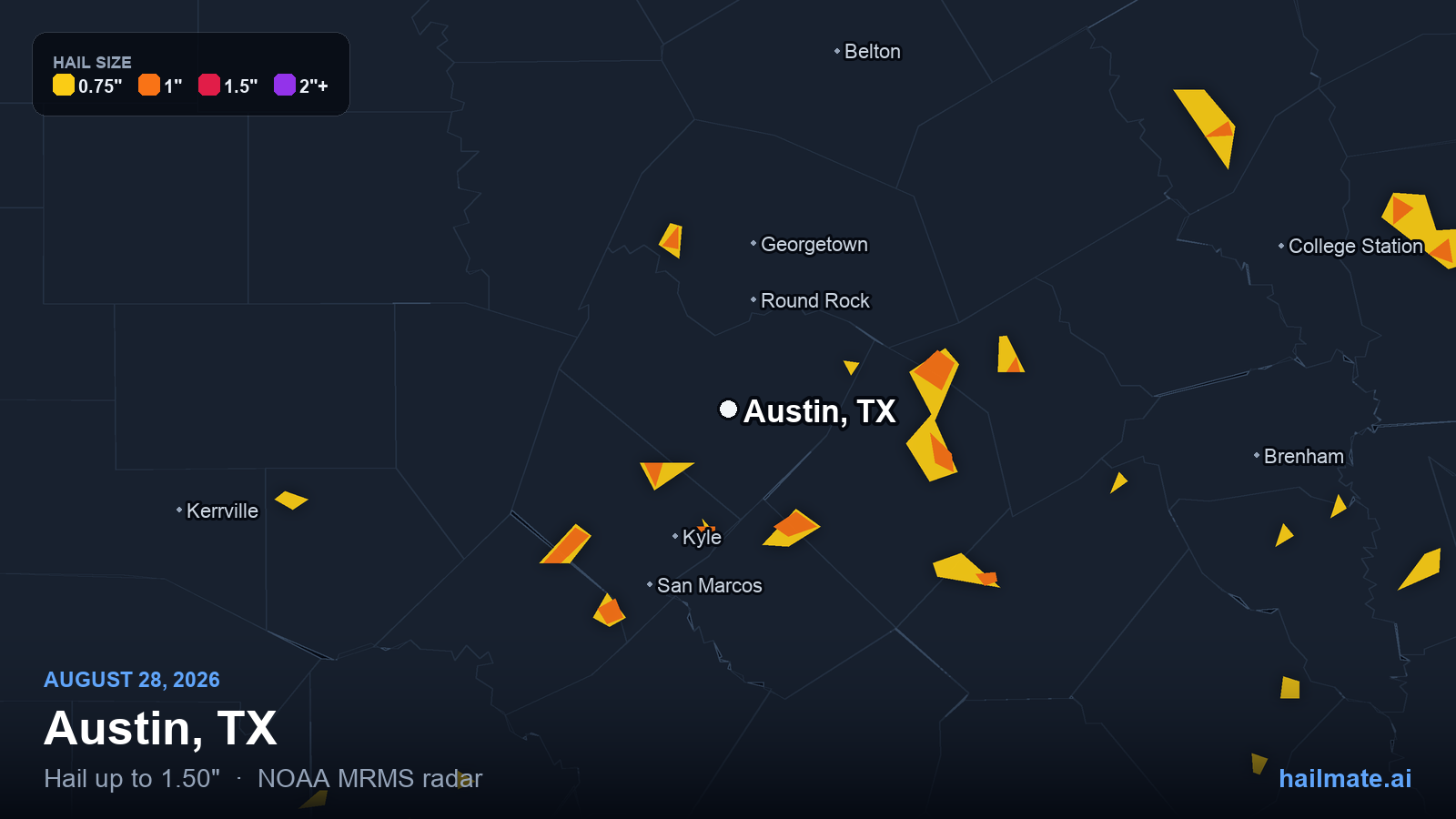
17 storms of an inch or more have been recorded over Austin since our radar archive begins. The largest measured 2.00″ — hen egg size.
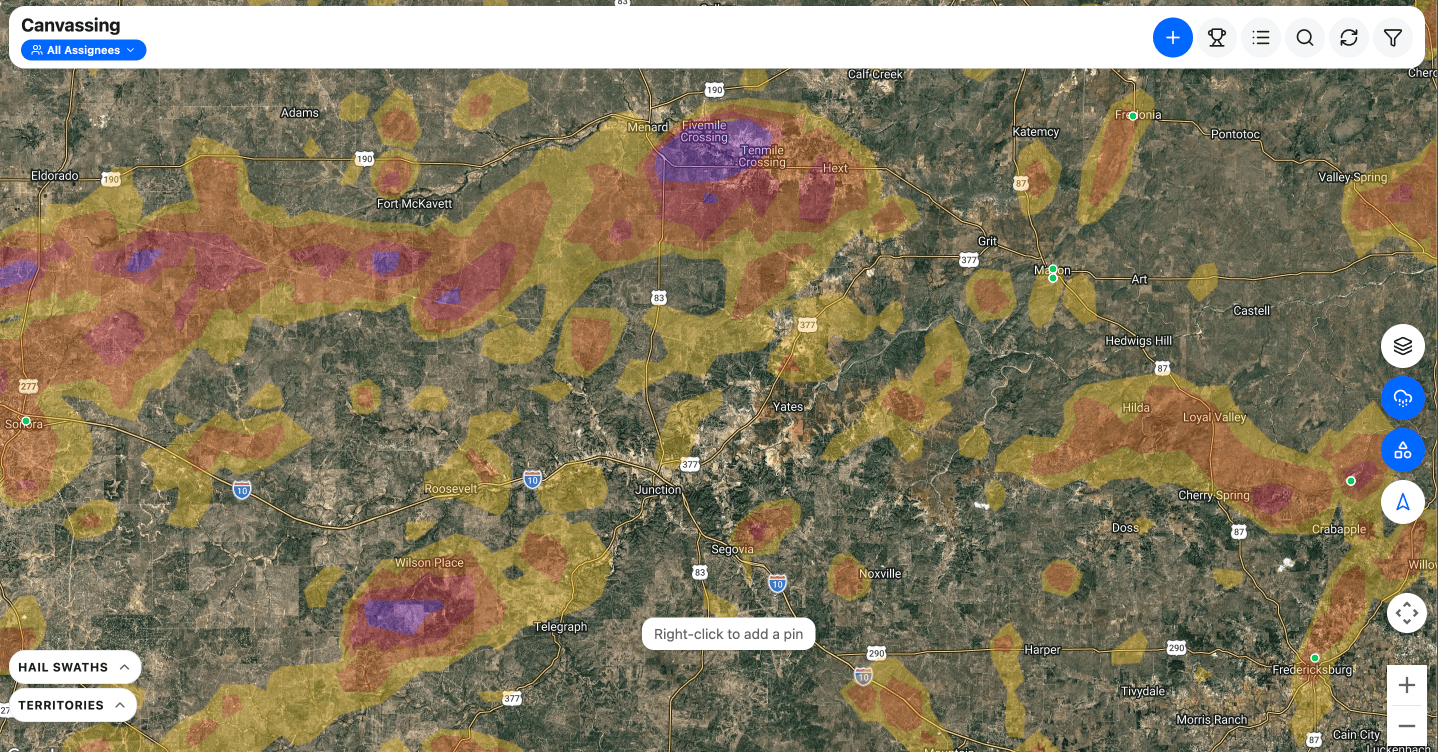
Claim your live interactive hail map
Every address in Texas at once — three years of NOAA hail swaths drawn on a map you can zoom, filter and actually work.
$79/moall of Texas, not one storm day
- Every hail storm since 2023 across Texas, at street level and filterable by stone size
- GPS door-knocking — pins, photos and who you have already hit
- Jobs, contacts, estimates and invoices included
- An alert the next time Texas gets hit
HailTrace charges $229 for this one day, once. $79 here is all of Texas, every day.
- Storms on record
- 17
- Largest stone
- 2.00″
- Most recent
- August 28, 2026
Did hail hit your address?
This page covers Austin as a whole. Check your own address to see every storm on record for your roof — the date and the stone size for each one — and we'll email you the full report to keep.
Check my addressFree, and no account needed to look it up. If hail did hit, you'll have the date and the stone size in writing — which is the first thing an adjuster asks for.
Hail storms over Austin
Other Texas cities with hail on record
Shopping for a hail app to work Austin?
These compare the tools roofers actually buy, with every price taken from the vendor's own site and linked. Most of the roundups you will find quote numbers that appear nowhere on the vendor's page.
- Best hail tracking apps, comparedHailMate, HailTrace, Hail Recon, HailStrike and RadarScope — every published price sourced and linked, and who each one is genuinely right for.
- HailMate vs HailTraceStreet-level NOAA swaths on a map your crew can knock, with the CRM already inside — instead of quote-only meteorologist maps billed on top of one.
- Hail map apps for roofers (and the Hail Recon alternative)Every storm on one map instead of loading dates one at a time — plus the canvassing and the whole claim, monthly, for what one state costs them a year.
- Best canvassing apps, comparedHailMate, SalesRabbit, SPOTIO, Knockio, RoofLink and Badger Maps — every published price sourced and linked, and two of them publish none.
Austin hail questions
The most recent hail of an inch or more over Austin on our NOAA radar record was August 28, 2026, when stones reached 1.50 inches — half dollar size. Every storm day we hold for the city is listed above, newest first.